What is a hybrid mesh firewall and how it works
 4m, 49s
 2
2
14:11, 14.05.2026

As organizations become more digitally connected, their networks become more complex and spread across various environments—on-premises, cloud, and edge. This expansion creates more opportunities for cyber threats. To handle this, many companies are turning to a new approach in cybersecurity: the hybrid mesh firewall.
In this article, we'll explore hybrid mesh firewalls, why they matter, how they work, and what to look for when implementing them.
Hybrid mesh firewall: What it is
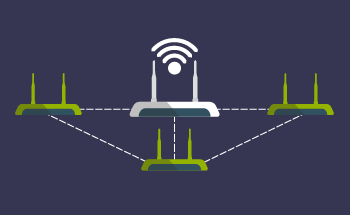
A hybrid mesh firewall is a security architecture that combines different types of firewalls—hardware, virtual, cloud-based, and Firewall-as-a-Service (FWaaS)—into a unified and integrated system. It creates a "mesh" of security controls across various environments, allowing consistent protection and policy enforcement.
Unlike traditional firewalls, which are limited to a single location or function, hybrid mesh firewalls operate across multiple sites, including remote offices, data centers, and public clouds. They are centrally managed, which helps security teams enforce rules and monitor traffic from one dashboard.
Why hybrid mesh firewalls are essential
Hybrid mesh firewalls are becoming critical in modern IT environments.
Here's why:
1. Tackling infrastructure complexity
Today's IT environments span multiple platforms: on-premises servers, private clouds, public clouds, SaaS tools, and edge computing. A traditional firewall can't handle this complexity alone. A hybrid mesh firewall connects all these parts and provides consistent security policies.
2. Bridging the cybersecurity talent shortage
Skilled cybersecurity professionals are in short supply. Hybrid mesh firewalls reduce the burden on IT teams by offering centralized management, automation, and easy policy control. This helps fewer people manage larger and more complex networks effectively.
3. Responding to evolving cyber threats
Cyberattacks are becoming more sophisticated, and AI and automation are being used to target vulnerable systems. Hybrid mesh firewalls can respond faster to these threats by sharing threat intelligence across the mesh and blocking suspicious activity in real-time, no matter where it occurs.
4. Using ai/ml and threat intelligence
Artificial intelligence (AI) and machine learning (ML) enhance many hybrid mesh firewalls. These technologies help detect unknown threats by analyzing traffic patterns and behaviors. Additionally, threat intelligence feeds keep the firewall updated with the latest indicators of compromise (IOCs).
Key features to consider in a hybrid mesh firewall
When choosing a hybrid mesh firewall solution, look for these core features:
Centralized management and visibility
A single, unified interface for managing all firewalls across the network is essential. This simplifies operations and gives security teams a full view of what’s happening across all environments.
Performance-driven ASIC appliances
Application-specific integrated circuits (ASICs) are hardware chips that boost firewall performance. Firewalls with ASICs offer low latency and high throughput, making them ideal for large enterprise environments.
Cloud-native firewall capabilities
Modern businesses rely heavily on cloud services. Your firewall should be able to operate inside cloud platforms like AWS, Azure, and Google Cloud to secure workloads and enforce policies in those environments.
Virtualized firewall solutions
Virtual firewalls can run in software-only environments, offering flexibility for securing virtual machines and containers. These are perfect for data centers and hybrid cloud environments.
Firewall-as-a-service (fwaas) model
FWaaS provides firewall functionality via the cloud. It’s scalable, easy to deploy, and cost-effective—especially for businesses with remote users or branch offices that need security without physical appliances.
Unified operating system architecture
Managing firewalls is much easier when all components run on the same operating system and software platform. This reduces complexity and allows consistent updates and policies.
Benefits of implementing hybrid mesh firewalls
As cyber threats become more advanced and IT environments grow more complex, businesses need flexible and intelligent solutions. Hybrid mesh firewalls offer many benefits that make them essential to a modern cybersecurity strategy.
Here are some of the key benefits:
- Consistent security across all environments—cloud, on-premises, and edge
- Faster threat response with integrated intelligence and automation
- Reduced operational costs through central management and simplified policy enforcement
- Scalability to grow with your business, whether you add cloud services, branches, or remote teams
- Improved performance due to optimized hardware and software integration
Common misconceptions about hybrid mesh firewalls
Despite their growing popularity and clear advantages, many IT decision-makers still misunderstand hybrid mesh firewalls.
Let's clear up some of the most common ones:
- "They're only for large enterprises."
Not true. Even small and mid-sized organizations benefit from centralized management and simplified security. - "They replace all existing firewalls."
Hybrid mesh firewalls enhance existing tools by integrating them into a single architecture. You don’t need to rip and replace everything. - "They're too complex to deploy."
Many vendors offer ready-to-use solutions and managed services to simplify deployment.
Overview of fortinet solutions
Fortinet is a leader in hybrid mesh firewall technology. Its flagship product, FortiGate, provides:
- Physical, virtual, cloud-based, and FWaaS firewalls
- Centralized control via FortiManager
- AI-driven threat protection with FortiGuard Labs
- High-performance ASIC hardware
- Integration with Zero Trust and Secure Access Service Edge (SASE) frameworks
Fortinet’s platform is designed to handle large, distributed networks while offering simplified security and fast threat detection.
FAQ about hybrid mesh firewalls
How does a firewall work?
A firewall monitors and filters incoming and outgoing network traffic. It blocks or allows traffic based on security rules, protecting your network from unauthorized access and attacks.
What is the primary function of a firewall?
The primary function is to protect the network from external threats by controlling what data can enter or leave. Firewalls also prevent internal users from accessing harmful or restricted websites.
Which types of firewalls are commonly used?
- Packet-filtering firewalls
Examine packets of data and allow or deny them based on rules. - Stateful inspection firewalls
Monitor the state of active connections and make decisions based on context. - Next-generation firewalls (NGFWs)
Include advanced features like deep packet inspection, intrusion prevention, and application control. - Cloud-based firewalls
Protect cloud environments and services. - Firewall-as-a-Service (FWaaS)
Deliver firewall features through the cloud.
Was this article helpful to you?
 Yes
Yes
 No
No
VPS popular offers
-10%


 Linux
Linux
€ 69.99 /mo
Billed annually
-7.3%
Linux
€ 4.93 /mo
Billed annually
-9.5%
 Windows
€ 73.99 /mo
Billed annually
-10%
Linux
€ 134.99 /mo
Billed annually
-10%


€ 149.04 /mo
Billed annually
-29.4%
Linux
€ 17 /mo
Billed annually
-10%
Windows
€ 9.9 /mo
Billed annually
-21%
Windows
€ 65 /mo
Billed annually
-10%
Windows
€ 29.99 /mo
Billed annually
-10%
Windows
€ 19.99 /mo
Billed annually