Intel GPU D270: A New Contender Wants to Make AI Inference More Efficient
 1m, 33s
 2
2
14:44, 13.10.2026

Intel has another plan on the cards for AI hardware. The company shared additional information on the Crescent Island accelerator at the 2026 Open Compute Project Global Summit. The new GPU D-Series includes the new GPU D270, which is designed to perform AI inference instead of computing performance.
Inference is important because each time you pose a question to your AI assistant, your request needs to be processed in the data center quickly and efficiently.
Intel has equipped the D270 with 32 Xe cores, 256 XMX matrix engines, and a peak FP8 performance of 1.3 petaflops. Its memory bandwidth reaches 1.5 TB per second. Intel’s own card will feature 160GB of LPDDR5X memory, while hardware partners can build versions with up to 480GB.
Can the D270 Challenge Bigger AI Accelerators?
Intel doesn’t strive to be victorious in all battles with regards to performance. For example, the D270 requires 350 watts of power and has air cooling support, which means there is one more possibility for handling energy consumption and cooling expenses in the data centers.
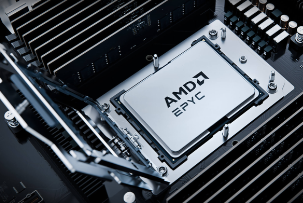
As an example, AMD’s MI350P provides up to 2.3 petaflops theoretical dense FP8 performance. The D270 lacks behind in such metrics, yet the pure numbers say nothing about the actual performance.
Intel has started sending sample cards to customers, but it has not confirmed a commercial launch date or pricing. A 2027 release now looks like a possibility for businesses planning their next AI infrastructure upgrade.
Our Take
In our opinion, the main advantage that Intel may have is to make it cheaper to run AI inference. If the D270 has decent performance with lower energy consumption, then the cost of running can be decreased in data centers. This might eventually benefit the companies’ users as well.
Want to keep up with AI hardware developments? Share this article with your colleagues, follow us on social media, and explore our other technology stories.
Was this article helpful to you?
 Yes
Yes
 No
No
VPS popular offers
-10%


 Linux
Linux
€ 15.95 /mo
Billed annually
-7.1%
 Windows
€ 21 /mo
Billed annually
-8.8%
Windows
€ 47.49 /mo
Billed annually
-7.4%
Linux
€ 5.03 /mo
Billed annually
-8.4%
Windows
€ 37.4 /mo
Billed annually
-10%


€ 18.1 /mo
Billed annually
-10%
Linux
€ 231 /mo
Billed annually
-10%
Linux
€ 49.99 /mo
Billed annually
-10%
Windows
€ 28.44 /mo
Billed annually
-9.3%
Windows
€ 53.99 /mo
Billed annually