China’s AI Chip Challenge: Can Iluvatar CoreX Take on Nvidia?
 1m, 39s
 2
17:25, 02.11.2026

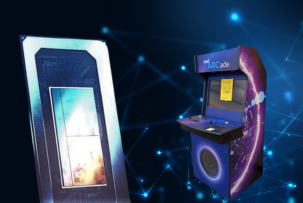
Yet another big step has been taken by China’s semiconductor sector. The local manufacturer of chips known as Iluvatar CoreX has launched its Tiangai 300 GPU, which reportedly rivals or even surpasses Nvidia H200 in artificial intelligence calculations.
This was unveiled in a live demo shown to the Chinese press. Reports suggest that Tiangai 300 performed better in complex multimodal applications, including creation of videos and images from text prompts through AI models like Z.ai’s GLM-5.3.
This development brings Iluvatar CoreX into the limelight. The H200 is currently one of the most potent AI processors that Nvidia has available for export to China despite US restrictions. Equaling the performance of the H200 would be a significant milestone for China’s local semiconductor industry.
China’s Push for Chip Independence
It is more than a sign of the product’s availability on the market. US export regulations have been making it difficult for Chinese companies to access new hardware technology. That is why the local producers want to reduce their dependence on foreign companies.
Iluvatar CoreX aims to be part of the transition. From the recent report, it appears that Chinese semiconductor makers are getting closer to their rivals from abroad. Nevertheless, no matter how impressive the demos are, they don’t necessarily mean that Tiangai 300 will perform consistently in real-world use cases.
Our Take
We think that this could potentially impact the AI hardware market positively. Better Chinese chips would provide businesses with more options for suppliers, create healthy competition and eventually lower costs. As a consumer of AI services, this means that the price of such services can be lowered. However, Nvidia still has a great competitive edge with its software ecosystem. Performance of the hardware won’t dictate the terms of future success of AI.
Want to stay ahead of the AI race? Share this article with your network, follow us on social media and explore more of our technology coverage to discover what is shaping the future of artificial intelligence.
Was this article helpful to you?
 Yes
 No
VPS popular offers
-10%


 Linux
€ 134.99 /mo
Billed annually
-20.4%
Linux
€ 18 /mo
Billed annually
-7.2%
Linux
€ 6.4 /mo
Billed annually
-10%
Linux
€ 7.7 /mo
Billed annually
-10%
Linux
€ 21.44 /mo
Billed annually
-20.5%
Linux
€ 95 /mo
Billed annually
-10%
 Windows
€ 10.23 /mo
Billed annually
-4.5%
Windows
€ 17.7 /mo
Billed annually
-10%


€ 149.04 /mo
Billed annually
-8.8%
Windows
€ 47.53 /mo
Billed annually