Germany’s New Supercomputer Puts 33 Petaflops to Work
 1m, 33s
 2
2
14:31, 07.10.2026

Germany has acquired a state-of-the-art scientific computer system for their use. Karlsruhe Institute of Technology (KIT) has unveiled HoreKa 2 which is a hybrid supercomputer that will be capable of meeting highly complex computational tasks in the areas of science, engineering, and artificial intelligence.
This €17 million supercomputer is based in KIT Campus North in Baden-Württemberg. It provides a maximum theoretical peak performance of 33 petaflops, which is double compared to the capacity of its predecessor (17 petaflops).
Over 42,000 CPU cores, 300 accelerators, and 250 TB of main memory will allow researchers to have adequate computing resources.
A Mixed Hardware Approach Gives Researchers More Flexibility
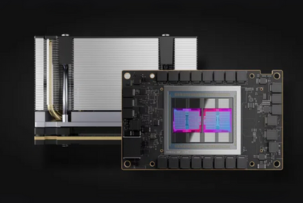
HoreKa 2 is not dependent on any one type of hardware. HoreKa 2 integrates processors from both AMD and Intel and has NVIDIA accelerators.
This supercomputer contains nodes of AMD EPYC 9655, Intel Xeon, as well as nodes configured with NVIDIA H100 and H200 GPUs. The researchers can, therefore, select whatever hardware is best suited for their work.
The current supercomputer comprises several different parts such as HoreKa Onyx, Blue, Teal and Ruby. It is going to be extended by HoreKa Jade with NVIDIA Grace platforms and B200 accelerators.
The entire supercomputer operates on Red Hat Enterprise Linux 9.x and utilizes IBM Spectrum Scale for distributed file storage.
Beyond the Supercomputer Lab
HoreKa 2 will allow research to be conducted on climate modelling, novel materials, particle physics, energy systems, and artificial intelligence. In our opinion, the most significant advantage of HoreKa 2 is its flexibility. The scientists will be able to test various computer architectures without creating an independent architecture for each individual research project.
As for you, this development will be important because it will decrease the development cycle of science-based research significantly.
If you found this useful, share it with your network and follow us on social media for more technology updates. You can also explore our other articles on AI, servers and high-performance computing.
Was this article helpful to you?
 Yes
Yes
 No
No
VPS popular offers
-10%


 Windows
€ 29.99 /mo
Billed annually
-10%
 Linux
Linux
€ 134.99 /mo
Billed annually
-21.5%
Windows
€ 26 /mo
Billed annually
-10%
Windows
€ 28.99 /mo
Billed annually
-15.6%
Linux
€ 5.33 /mo
Billed annually
-5.4%
Windows
€ 12.01 /mo
Billed annually
-8.4%
Windows
€ 37.4 /mo
Billed annually
-10%
Linux
€ 25.25 /mo
Billed annually
-9.5%
Windows
€ 121.5 /mo
Billed annually
-24.7%
Linux
€ 31 /mo
Billed annually