Microsoft’s Quantum Leap: Could Majorana 2 Bring Practical Quantum Computing Sooner Than Expected?
 1m, 49s
 2
2
11:36, 04.06.2026

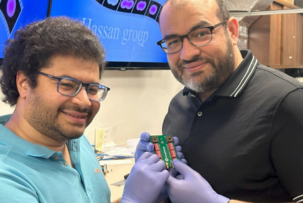
Microsoft has unveiled its new quantum chip, Majorana 2, during the Build 2026 conference. The company claims the technology delivers a dramatic boost in qubit stability and could accelerate the arrival of commercially useful quantum computers.
Qubits are the building blocks of quantum computing. Unlike traditional bits, they can process far more complex calculations. The challenge has always been keeping qubits stable long enough to perform meaningful work.
According to Microsoft, Majorana 2 significantly improves that stability. While the previous generation could maintain a qubit state for several seconds, the new chip reportedly pushes that figure beyond 20 seconds, with some tests reaching up to a full minute.
Smarter Materials and AI Driven Research
Microsoft credits much of this progress to a redesigned hardware architecture. Engineers replaced aluminum superconductors with lead, which offers stronger protection against environmental interference. The team also introduced new semiconductor materials to improve overall performance.
Artificial intelligence played a major role in the development process. Microsoft used its Discovery platform to analyze decades of scientific research, simulate material combinations, and identify promising paths that human researchers might have overlooked.
Despite the breakthrough, Majorana 2 remains an early stage technology. The chip currently contains just 12 topological qubits. Experts estimate that future quantum systems may require millions of qubits to unlock large scale commercial applications.
The Race Toward 2029
Microsoft now believes it can reach a scalable commercial quantum computer by 2029, much earlier than its previous target. The company is betting on topological qubits, a challenging approach that could ultimately reduce error rates and improve reliability.
Meanwhile, IBM continues to advance superconducting qubits, while Google recently highlighted progress with its Willow processor. The competition is intense, and every breakthrough could reshape the future of computing.
Our Take
We believe Majorana 2 is an important milestone, even if many scientific questions remain unanswered. If Microsoft can validate these results at a larger scale, industries ranging from medicine to materials science could benefit from faster discovery and more powerful simulations. For businesses and consumers alike, this could mark the beginning of a new computing era.
If you enjoyed this article, share it with your network, follow our social channels for more technology insights, and explore our latest articles covering AI, quantum computing, and emerging innovations.
Was this article helpful to you?
 Yes
Yes
 No
No
VPS popular offers
-10%


 Linux
Linux
€ 5.2 /mo
Billed annually
-10%
 Windows
€ 18.1 /mo
Billed annually
-10%
Linux
€ 69.99 /mo
Billed annually
-10%
Linux
€ 15 /mo
Billed annually
-10%
Windows
€ 18.65 /mo
Billed annually
-7.4%
Linux
€ 4.98 /mo
Billed annually
-10%


€ 18.1 /mo
Billed annually
-8.8%
Windows
€ 47 /mo
Billed annually
-20.5%
Linux
€ 95 /mo
Billed annually
-7.2%
Linux
€ 6.89 /mo
Billed annually