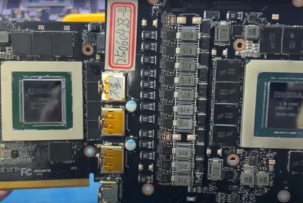
Intel Chip with NVIDIA RTX Graphics to Drop in 2028
 1m, 22s
 2
2
11:05, 17.06.2026

Longtime rivals Intel and NVIDIA have joined forces to create a unique processor codenamed Serpent Lake. According to information from an insider, the ambitious chip will be announced at CES 2028 and will debut in the first quarter of 2028.
The project is a specialized system-on-a-chip (SoC) that, for the first time in the industry's history, will combine Intel's x86 computing cores and NVIDIA RTX-class graphics chiplets in a single package.
Rubin Architecture Under the Hood and Competition with Halo Design
The exact specifications of the chip are kept under wraps, but that doesn't stop experts from making predictions about the graphics subsystem. Many believe that Serpent Lake's graphics will be based on the NVIDIA Rubin architecture.
Technically, Serpent Lake will be based on Titan Lake processors and will inherit an SoC design similar to AMD's Halo concept.
Market Positioning of the Newcomer
Despite the joint development, both companies will continue to promote their own product lines. Intel will keep pushing Panther Lake for the premium laptop segment, while NVIDIA will develop its standalone RTX Spark mobile platform for heavy workstations and professional systems.
Serpent Lake will occupy a specific niche where a symbiosis of a powerful CPU and graphics is needed without the necessity of installing an additional discrete graphics card.
Why It Can Change the Industry
Until now, only NVIDIA itself has integrated RTX-level graphics into its SoCs. The emergence of such a hybrid from Intel will deal a serious blow to AMD, which has dominated the integrated graphics market.
If the chip proves successful, the format of classic gaming laptops and compact PCs could change forever, blurring the line between integrated and discrete graphics cards.
Was this article helpful to you?
 Yes
Yes
 No
No
VPS popular offers
-18.6%


 Windows
€ 38 /mo
Billed annually
-20.5%
 Linux
Linux
€ 95 /mo
Billed annually
-8.9%
Windows
€ 56 /mo
Billed annually
-8.4%
Windows
€ 37.4 /mo
Billed annually
-7.1%
Windows
€ 21 /mo
Billed annually
-7.2%
Linux
€ 5.92 /mo
Billed annually
-21.5%
Windows
€ 40 /mo
Billed annually
-13.1%
Linux
€ 7 /mo
Billed annually
-5%
Windows
€ 12.1 /mo
Billed annually
-10%
Windows
€ 10.23 /mo
Billed annually